How to Achieve a Smooth Finish with Masonry Paint
When it comes to giving your exterior walls a fresh new look, masonry paint is an excellent choice. Not only does it provide a durable and long-lasting finish, but it also helps to protect your walls from the elements. However, achieving a smooth finish with masonry paint can be a challenge, especially for those who are new to DIY painting. In this article, we will provide you with a step-by-step guide on how to achieve a smooth finish with masonry paint.
Preparing the Surface
Before you start painting, it is essential to prepare the surface of your walls. This includes cleaning the walls to remove any dirt, grime, or moss that may have accumulated over time. Use a wire brush to scrub away any loose material, and then give the walls a good rinse with a hose pipe. If there are any areas of mould or mildew, you will need to treat them with a fungicide before painting.
Once the walls are clean, you will need to repair any cracks or holes. Use a patching compound to fill in any gaps, and then sand the area smooth. If there are any areas of loose render or peeling paint, you will need to scrape them away and fill in the gaps with a new layer of render or spackling compound.
Choosing the Right Paint
With so many different types of masonry paint available, it can be difficult to know which one to choose. When selecting a paint, consider the colour and finish you want to achieve, as well as the level of durability and weather resistance you need. Look for a paint that is specifically designed for exterior use and that is resistant to fading, cracking, and peeling.
People Also Look For:
- Vintro Paint | Dark Grey Matt Emulsion | Luxury Wall & Ceiling Paint | Smooth Chalk Finish | 2.5L (Midnight)
- Sandtex Smooth Masonry 5L Ivory Stone
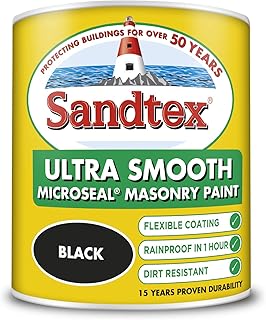
- Sandtex Ultra Smooth Masonry Paint 5 Litre Stock Colours - Black
- Sandtex Masonry Paint 2.5L Ultra Smooth Cornish Cream
- earthborn Claypaint, Breathable paint for Walls and Ceilings (Lemony, 2.5 Litre)
It is also important to choose a paint that is suitable for the type of surface you are painting. For example, if you are painting a wall with a high level of salinity, you will need a paint that is resistant to salt damage. Similarly, if you are painting a wall that is exposed to high levels of sunlight, you will need a paint that is resistant to fading.
Applying the Paint
Once you have prepared the surface and chosen the right paint, it is time to start applying the paint. Begin by stirring the paint thoroughly and applying a primer if necessary. Use a roller to apply the paint to the main areas of the wall, working in sections to maintain even coverage.
Use a brush to cut in around the edges and to paint any areas that are difficult to reach with a roller. Make sure to work in a consistent pattern, using long, smooth strokes to achieve an even finish. Apply two coats of paint, allowing the first coat to dry completely before applying the second coat.
Tips for Achieving a Smooth Finish
There are several tips and tricks you can use to achieve a smooth finish with masonry paint. One of the most important is to make sure the surface is completely dry before applying the paint. If the surface is damp or wet, the paint will not adhere properly, and you will end up with a finish that is uneven and rough.
Another tip is to use a high-quality roller with a thick nap. This will help to create a smooth, even finish, and will reduce the risk of streaks and marks. You should also use a paint tray with a grid to remove excess paint from the roller, as this will help to prevent the paint from becoming too thick and uneven.
Finally, make sure to work in a well-ventilated area, and avoid painting in direct sunlight or high winds. This will help to prevent the paint from drying too quickly, and will reduce the risk of brush strokes and other imperfections.
Common Mistakes to Avoid
There are several common mistakes that people make when using masonry paint, which can result in a finish that is uneven, rough, or otherwise imperfect. One of the most common mistakes is applying the paint too thickly. This can cause the paint to become uneven and rough, and can lead to a finish that is prone to cracking and peeling.
Another mistake is not preparing the surface properly. If the surface is not clean and dry, the paint will not adhere properly, and you will end up with a finish that is uneven and rough. You should also avoid painting over existing paint or coatings without properly preparing the surface first, as this can lead to a finish that is uneven and rough.
Finally, make sure to follow the manufacturer's instructions when it comes to application and drying times. If you do not allow the paint to dry for the recommended amount of time, you may end up with a finish that is uneven, rough, or otherwise imperfect.
Conclusion
Achieving a smooth finish with masonry paint requires careful preparation, attention to detail, and a bit of practice. By following the tips and guidelines outlined in this article, you can create a beautiful, long-lasting finish that will enhance the appearance of your exterior walls and protect them from the elements. Whether you are a seasoned DIY enthusiast or a beginner, with the right techniques and materials, you can achieve a professional-looking finish that will last for years to come.
Remember to always follow the manufacturer's instructions, and take your time when applying the paint. With patience and practice, you can create a smooth, even finish that will make your exterior walls look like new. So why not give it a try? With masonry paint, you can give your home a fresh new look that will make it stand out from the crowd.